Tracer Gas Detector Finder
Tool-focused reference for tracer gas detection. Choose your detector type and brand, then use the panels below to understand what the instrument is telling you – no formulas, no pressure charts, just the tools.
1. Detector Type & Brand
This changes which tips below are most relevant for how your meter behaves.
Brand selection is for training and language only.
This just tells trainees which help text to read first.
2. Universal Detector Basics (Tool View)
These instruments sense very small concentrations of a specific gas (hydrogen, helium, methane) in the air around the sensor tip and convert that into a visual and/or audible signal.
Think of them as concentration meters: your job is to move the sensor and watch for the peak.
- Sensitivity / Gain – How strongly the detector responds to small gas changes.
- Auto Zero / Reset – Sets the current background level as "zero" so you only see changes.
- Bar Graph / LEDs – Quick visual indicator for more/less gas.
- Numeric Readout (PPM, cc/sec, g/yr) – Shows the approximate concentration or leak rate.
- Audible Tone – Beep or tic rate that speeds up as gas concentration increases.
Different brands look different, but almost all detectors are some combination of bars, numbers, and beeps.
3. Brand Profiles & Tool Notes
This section is about how the instruments behave – not how to pressurize or test a system.
Gas: 5% Hydrogen / 95% Nitrogen (forming gas)
Style: Pumped sniffer wand with bar graph and audible tone.
- Optimized for tracer gas water leak detection through soil, slab, and wall finishes.
- Bar graph climbs as hydrogen concentration increases; tone speeds up near the peak.
- Auto-zero button lets you quickly reset background between locations.
Gas: Helium, Hydrogen, and other gases depending on configuration
Style: High-sensitivity industrial leak detectors with numeric PPM / leak rate readouts.
- Thermal conductivity sensors give very precise numeric readings.
- Displays PPM or leak rate (cc/sec, g/yr) for comparing locations and documenting severity.
- Auto-zero and fast pump make it easy to see small incremental changes as you move the probe.
Gas: Helium & Hydrogen
Style: Pumped detector with digital display and bar graph.
- Sensitivity down into the tens of PPM range for very small leaks.
- Auto and manual modes: techs can lock sensitivity or let the unit scale automatically.
- Ideal for closed systems (pressurized cables, tanks, industrial lines) charged with tracer gas.
4. Reading the Indicators
5. Tracer Gas Video Training
Watch these videos to see tracer gas hydrogen mix and Jacobs 430 techniques in action.
6. Gas Type Visuals
These images are for training only. They illustrate the behavior of different tracer gases.
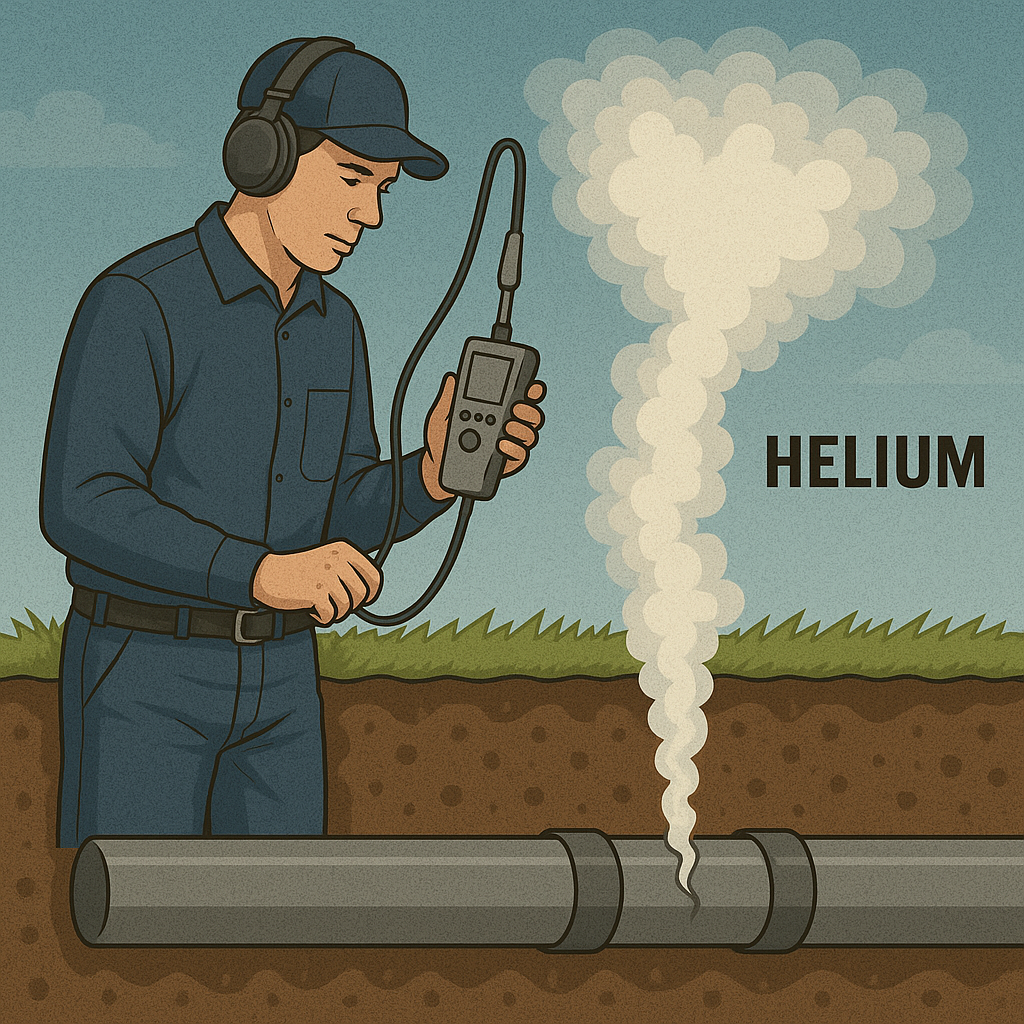
Technician scanning above a buried line with a helium sniffer. The light, fluffy plume illustrates helium's tendency to rise and disperse quickly once it reaches the surface.
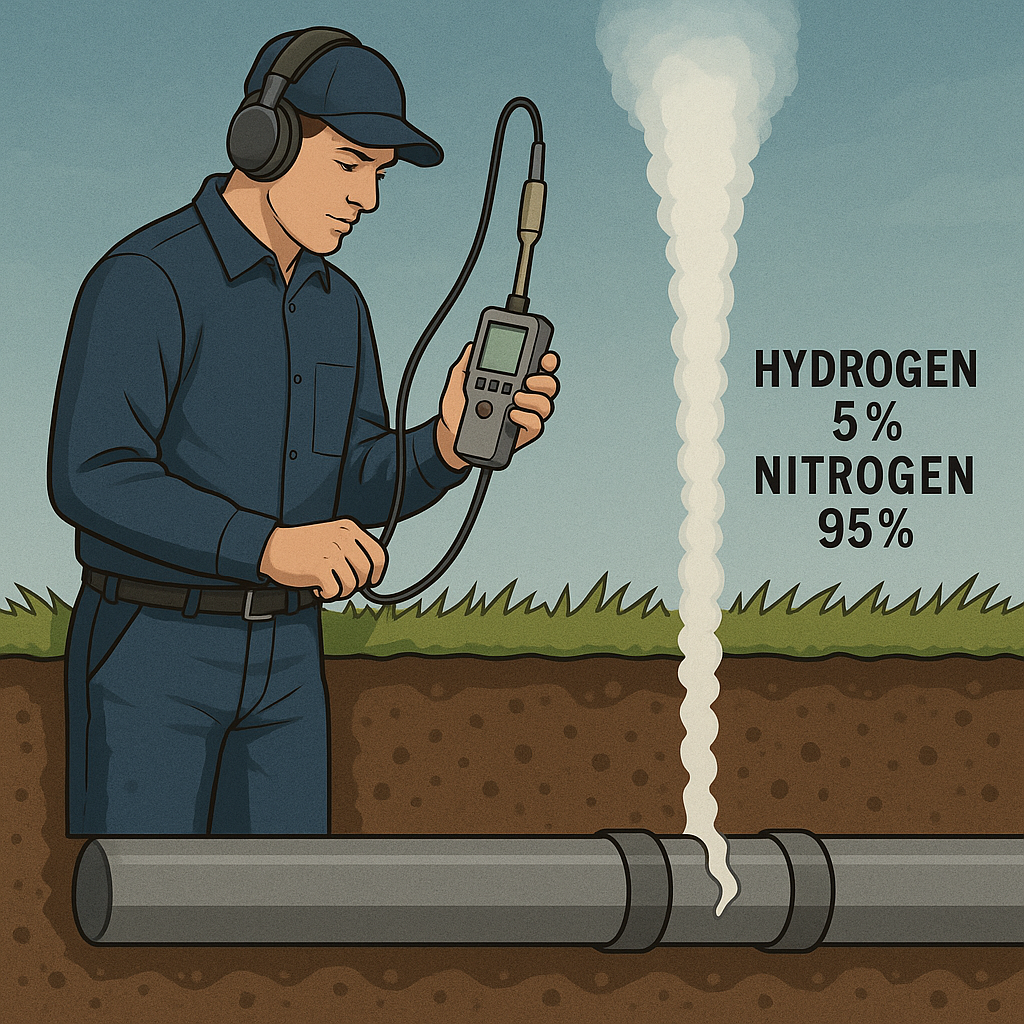
Tech using a hydrogen tracer gas detector while a narrow plume escapes from a buried pipe. Labelled mix reinforces the gas type the detector is tuned for.
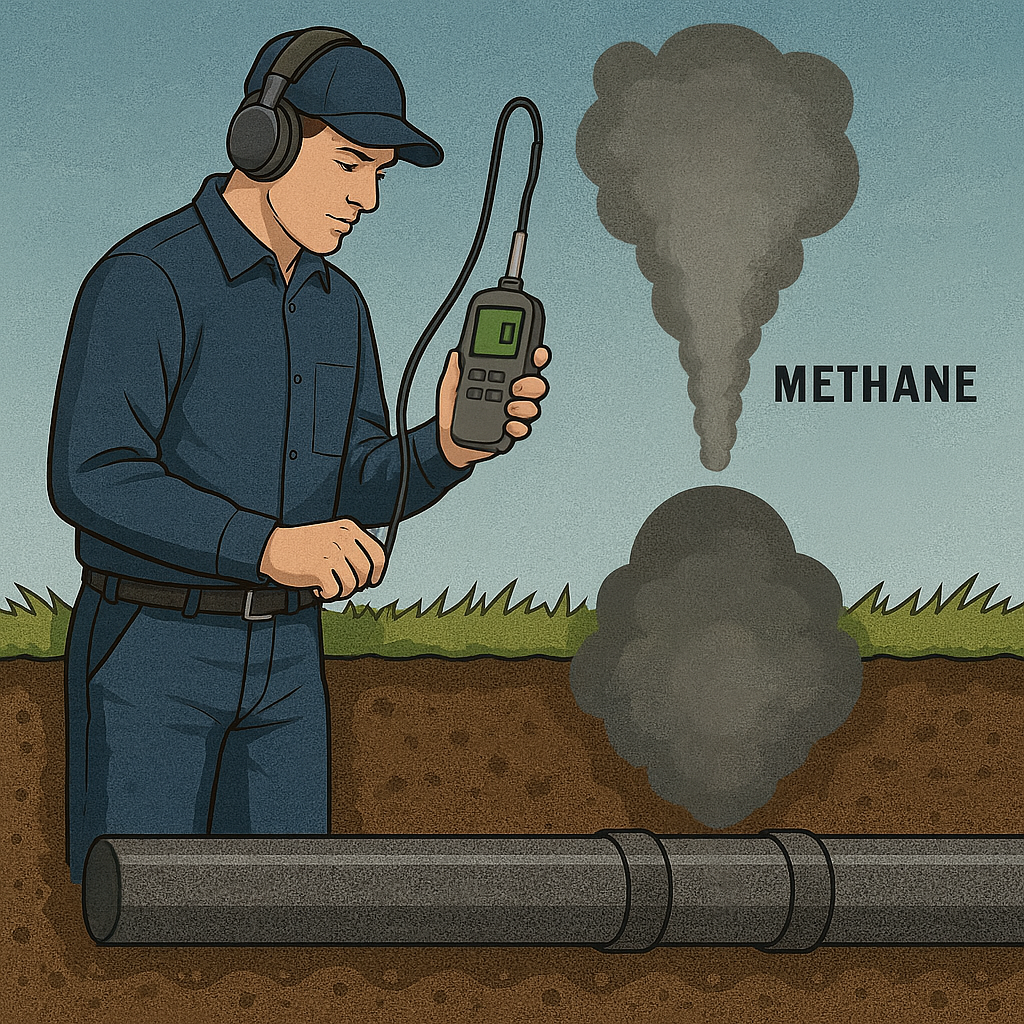
Technician checking a pipeline with a methane detector. The darker, denser cloud near the ground with a softer plume above represents how methane can both rise and, when trapped, accumulate in low spots or trenches before venting upward.
7. Quick Tool Tips
New Techs (Basic)
- Know which gas your detector is designed for (H₂, He, CH₄) before you start.
- Watch for relative changes in bars, numbers, and beeps rather than chasing absolute values.
- Use auto-zero when you move to a new area so the instrument reads changes from that spot.